How Often Should You Service Your Solar System? A Perth Owner’s Guide to Solar Maintenance
Your Solar Maintenance Guide - Made Easy
Solar Maintenance
Set and forget” is the worst advice anyone ever gave about a solar system. A solar system is a working electrical asset that operates outdoors every day. Like every other electrical asset on your property, it benefits from regular checkups, and like every other one, it costs you money when it does not get them.
This guide covers what we tell our customers when they ask how often their solar system actually needs servicing in Perth. It walks through what is included in a proper service, when to call us between scheduled visits, and the WA-specific factors that change the answer. If you would rather skip the detail and book in, head to our solar maintenance service page.
The Right Cadence for Most Perth Systems
For most residential solar systems in Perth, the right rhythm is a lighter visual inspection every twelve months and a full service every twenty-four. Between those, you call an electrician immediately if you notice production dropping, fault codes on the inverter, isolator trips or any visible damage. That is the simplified answer, and for the average suburban system it is the right one.
The cadence shifts depending on where you live and what is installed. Coastal homes within five kilometres of the ocean and properties near unsealed roads or building sites generally benefit from annual servicing because salt air and airborne dust speed up wear on every component. Inland suburban homes can usually run on the twenty-four month full service cycle with a quick check at twelve. Commercial systems on flat roofs, larger residential arrays and any system with a battery fitted lean toward more frequent attention, simply because there is more to monitor and more downside if something drifts.
Why Maintenance Frequency Matters
A quality solar system installed in 2020 should still be producing around ninety percent of its original output today. If it is producing seventy percent, something is wrong, and the longer it sits unaddressed, the more electricity bill it costs you.
The reasons performance drops below where it should be tend to be the same ones, year after year. Soiled panels stop irradiance reaching the cells, so generation slowly drops as the dust film builds. Inverters drift into degraded operation or limited output mode after years of running hot, particularly in Perth summers. DC connector failures on the roof can interrupt a string circuit and you lose a chunk of output overnight without anything obvious changing on the inverter app. Trees grow over the years and start shading a part of the array that was clear at install. Tier 1 panels rarely fail outright, but cheaper panels do, and even a single hot-spotted panel can pull a whole string down with it. And occasionally, the system simply had a fault that nobody noticed because nobody checked.
Each of these is solvable. Most are caught easily during a routine service. None get better if you ignore them, and several become actively dangerous if left to deteriorate.
What an Annual Visual Inspection Actually Covers
The lighter twelve month check is designed to catch anything obvious without the time and cost of a full service. It starts with the data. We pull actual production figures and compare them against what the system should be generating for the period. From there, the inverter gets a visual check, the fault log is reviewed and any software updates are applied. The DC and AC isolators are operated to confirm they are functioning. The roof is inspected from ground level or short access where it can be done safely, and the switchboard integration is checked. The whole exercise finishes with a short written summary of system condition and any items that need follow-up.
A twelve month check is faster than a full service and significantly cheaper. For most Perth systems it is the right cadence between full services, and it catches the issues that would otherwise quietly compound over the next year.
What a Full Service Covers Every Twenty-Four Months
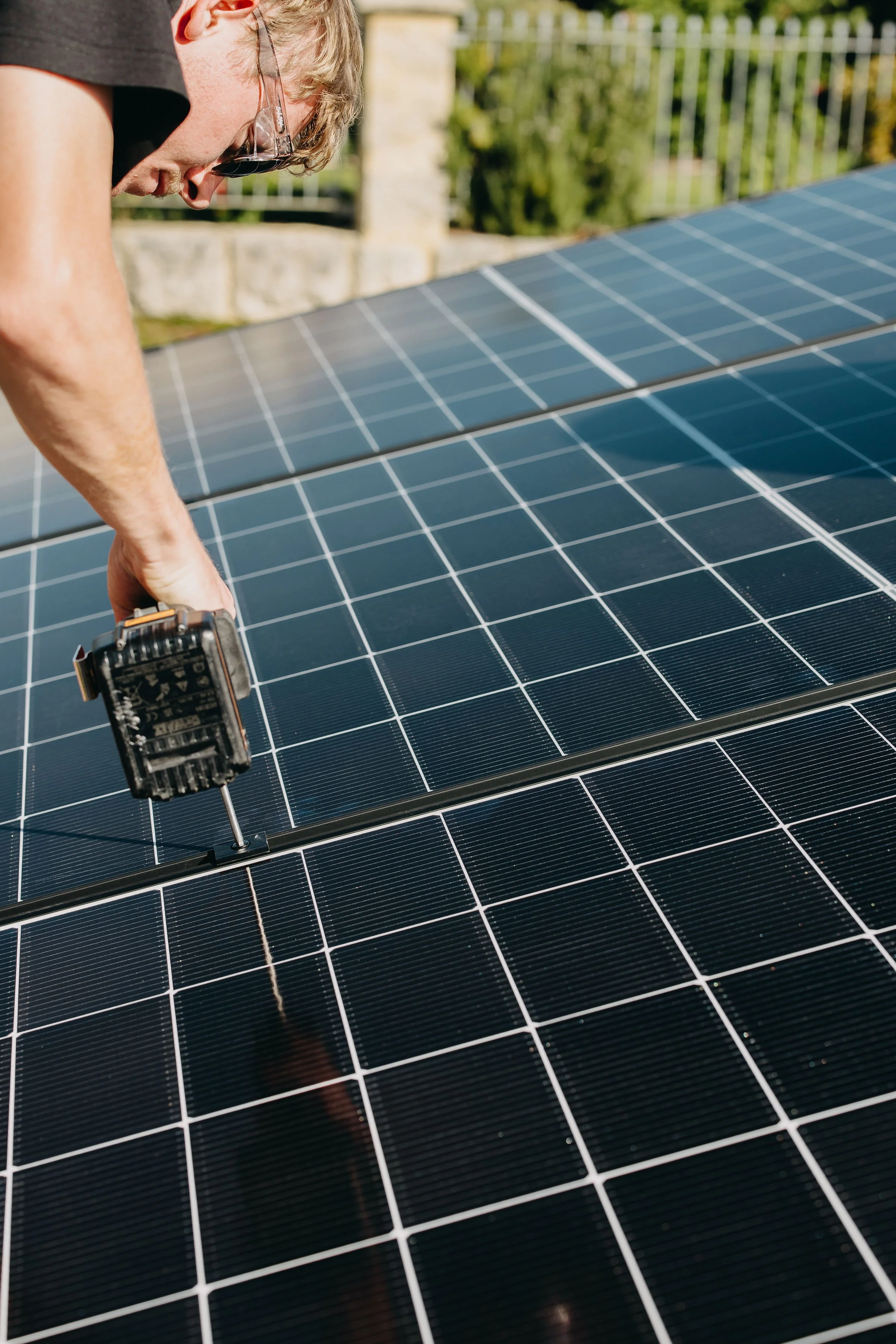
The full service is the one that protects warranty status, extends the operating life of your inverter and panels, and catches the issues that are not visible from ground level. It includes roof access for a physical inspection of every panel, every mounting rail, every fastener and every cable run. Panels are cleaned to manufacturer specification using deionised water and soft brushes, which is the only method that does not damage the surface or void warranties.
The inverter goes through a deeper inspection including ventilation and internal connection checks. A full electrical safety check covers earth fault testing and the integrity of every connection in the system. Where a battery is fitted, capacity is checked and connections are inspected. Any hardware showing wear is tightened or replaced. The visit ends with a written report including photos and recommendations. This is the service that holds the system together for the long term.
Signs Your System Needs Attention Right Now
There are situations where waiting for the scheduled service costs you more than booking a same-day call. The most common is a noticeable drop in production. If your inverter app shows lower numbers than the same period last year, or your electricity bill is creeping up despite consistent usage, the system is telling you something. A fault code or warning light on the inverter is another. A DC isolator that has tripped or will not reset, the same. Visible damage to panels (cracks, hot spots, brown patches or unusual discolouration) is worth a call straight away, as is bird nesting, significant debris or vegetation contact with the array.
Two warning signs are not negotiable. Any smoke, scorching, burning smell or melted plastic near the inverter or switchboard is an electrical fire risk and means turning the system off at the AC isolator and calling immediately. And any obvious change to your roof since install (new shadow from a tree that has grown, a broken tile, a roof leak appearing under the array) is worth investigating before it does any further damage.
Any of these mean a licensed electrician same day. The DC side of a solar system runs at voltages that can kill, and a fault in the array can become a fire hazard if it is left to deteriorate.
Perth-Specific Factors That Change the Schedule
WA conditions affect solar maintenance schedules in ways that do not show up in interstate guides. After years of servicing systems across the metro area, the same patterns come up repeatedly.
Coastal salt air is the biggest one. Properties within five kilometres of the coast see faster corrosion on roof-mounted hardware, faster film build-up on panel surfaces and accelerated degradation on lower-quality components. Coastal Perth homes generally benefit from annual servicing rather than twenty-four monthly, and the difference shows up most clearly on the mounting rails and connector housings.
Summer dust and pollen are the next factor. Most Perth systems pick up a visible coat of summer dust between November and March. A panel clean before the summer peak generation season usually pays for itself within weeks, because the lost output during summer is when the system would otherwise be generating most. Properties near unsealed roads, building sites or rural land see this effect amplified.
Bushfire smoke matters too. Significant smoke fall events leave a residue on panels that does not wash off in normal rain. After a major smoke event, a quick clean is worth booking even outside the regular service cycle. High summer temperatures push inverters harder than people expect. Inverters run hotter and degrade faster in extended heat, so ventilation, mounting location and software updates all matter more in Perth than in cooler climates. Inverter ventilation is something we always check as part of a service.
Finally, low winter rainfall means you cannot rely on rain to clean your panels. Some Perth properties go months between rain events significant enough to clear a panel surface. The film just keeps building until somebody does something about it, and that something is rarely the homeowner.
Cost Versus Savings on Solar Maintenance
A typical annual solar maintenance check for a residential system in Perth costs significantly less than what soiled panels can drop from your generation across a single summer. The numbers compound when you factor in the risk-cost of an undetected inverter fault, a DC isolator failure that goes from intermittent to permanent, or a roof penetration leak that turns from a small stain into real water damage to the ceiling cavity below.
There is a reason the manufacturers require documented servicing on most warranties. They know what neglected systems do, and they price the warranty accordingly. A serviced system holds warranty, holds output and holds its value. An unserviced one usually does not, and you typically find out the hard way when the panels stop performing and the warranty claim gets knocked back for lack of service records.
What You Can Do Yourself, and What to Leave to an Electrician
There are useful things you can do yourself without ever climbing a ladder. Checking your production figures monthly through the inverter app is the most valuable habit you can build. If the numbers look off, screenshot any fault codes or warnings, then call. Visually checking the inverter location from time to time for unusual smells, sounds or warning lights costs nothing and catches problems early. Comparing your latest electricity bill against the same billing period last year is another quick read on whether the system is doing what it should. If a tree is growing toward the array and you can safely trim it from the ground, do that before it starts shading a panel.
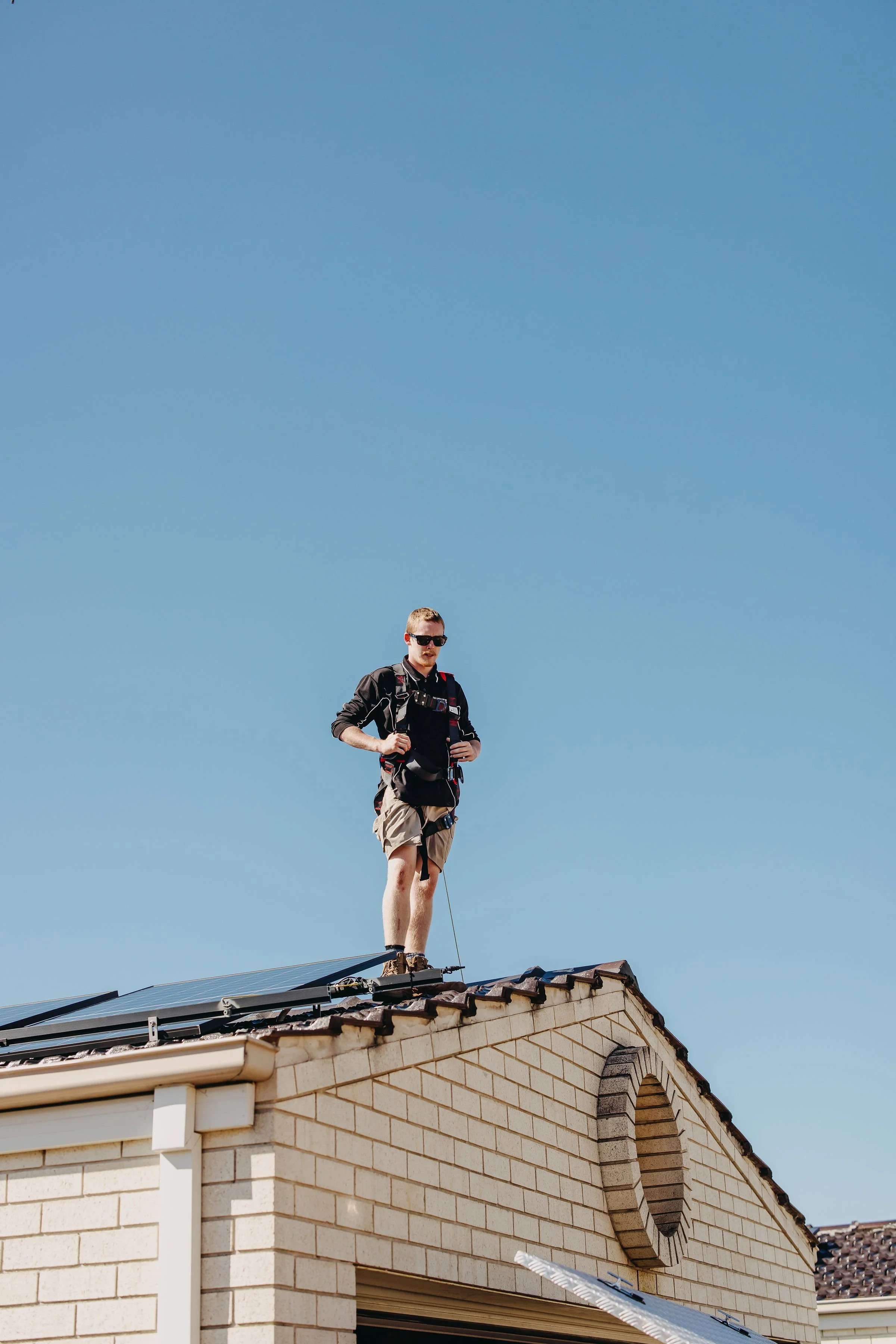
What you should not do yourself is anything that involves roof access without proper anchoring and fall protection, panel cleaning with anything other than the right tools and water, opening the inverter or any panel housings, touching the DC isolators or any electrical connection, or trying to diagnose a fault code by adjusting settings. Solar runs at DC voltages high enough to be lethal, and the panels are live in daylight even when the inverter is switched off at the AC side. The roof itself is a serious fall hazard. This is not a job for the curious homeowner. Licensed electricians have the training, the equipment and the insurance for a reason, and the cost of getting it wrong is significantly higher than the cost of booking the service.
Book Solar Maintenance with Hughes Electrical Group
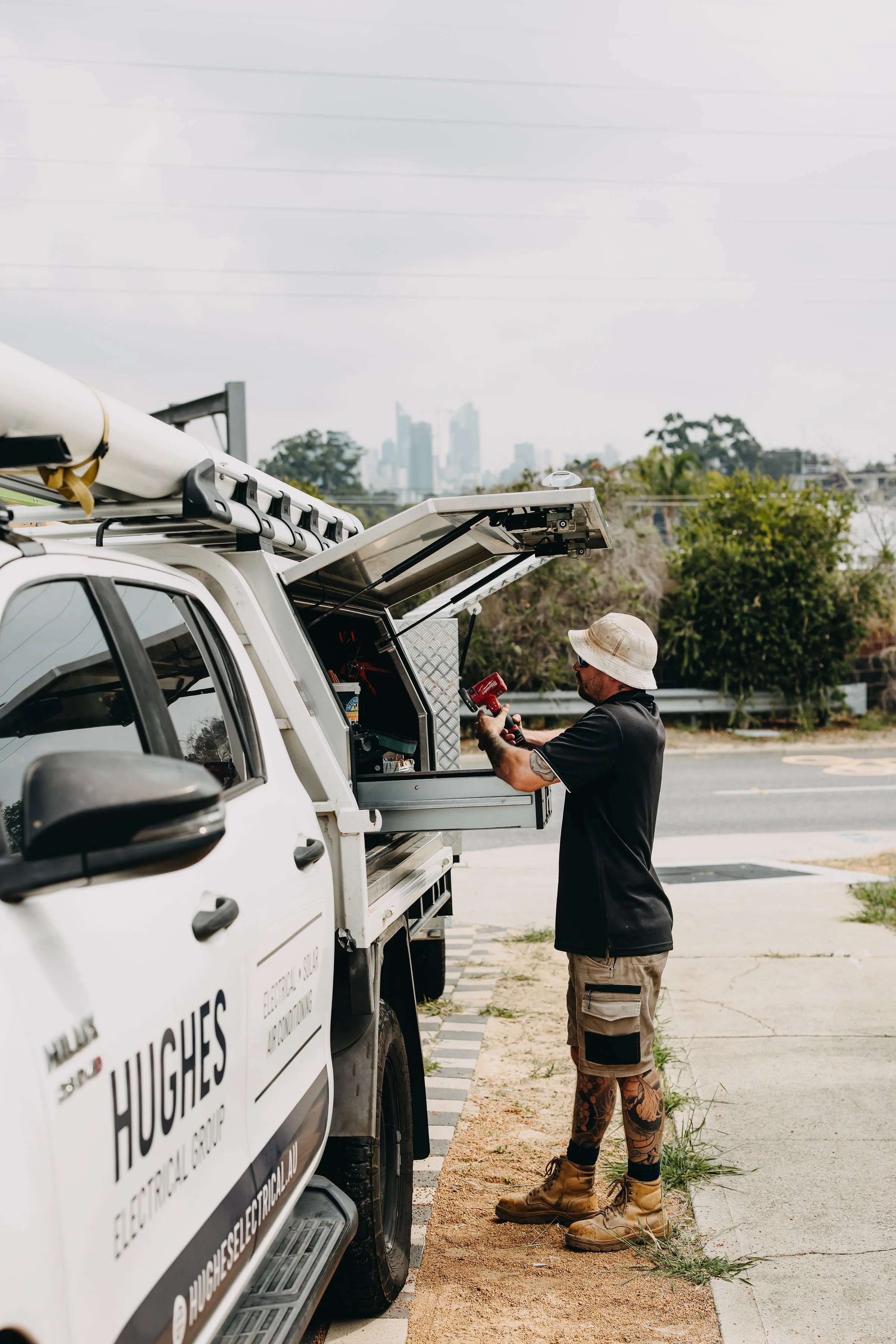
If your system is overdue for service or you have noticed any of the warning signs above, book a solar maintenance service with us. We work on systems we installed and systems installed by others, and our in-house licensed electricians provide a full service with a written report at the end.
Phone 0437 206 869, email info@hugheselectrical.au, or request a quote online. We are based in Myaree and we service across the Perth metro area. For more on how we approach solar generally, see our SmartSolar page.