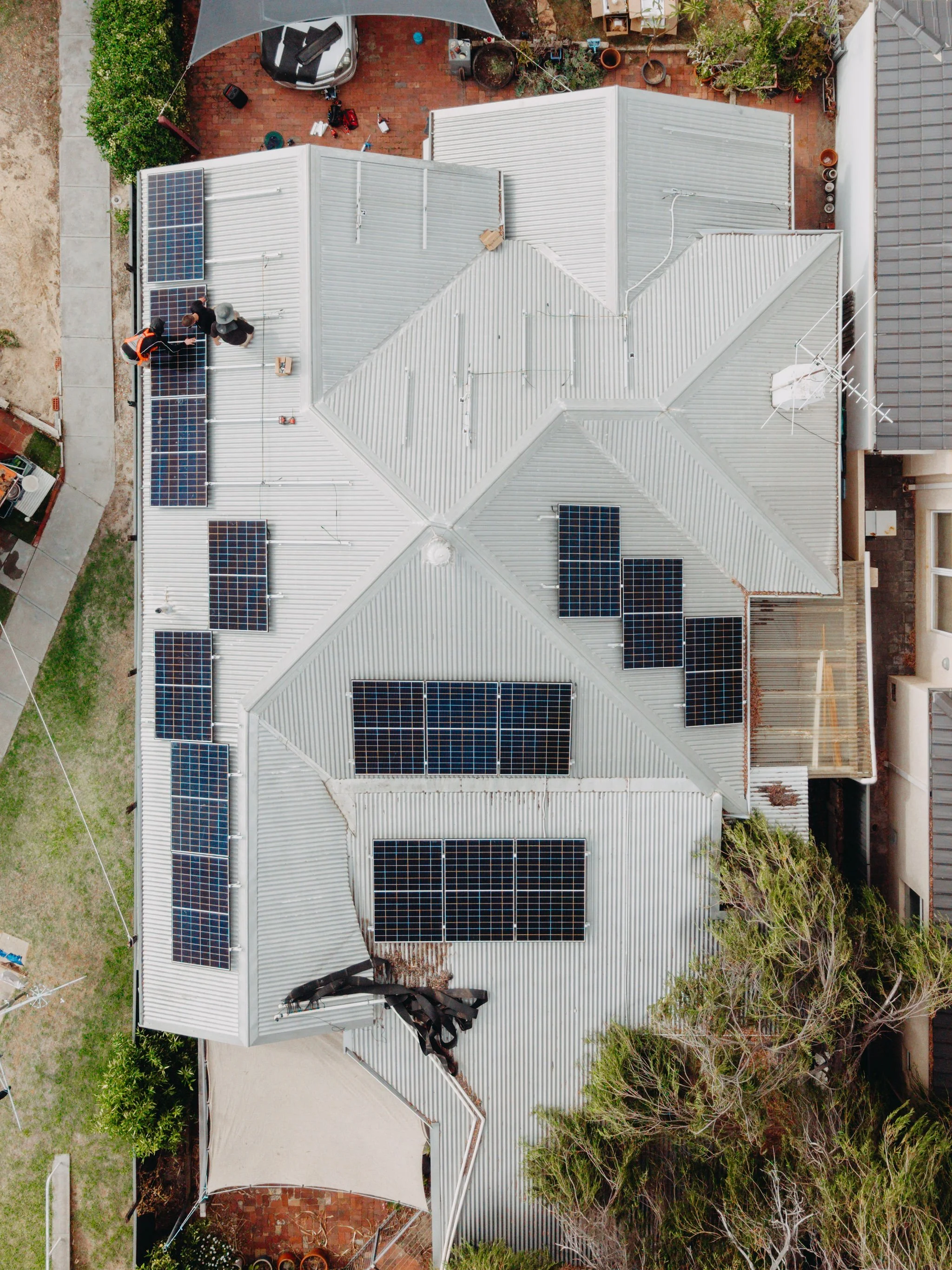
How Much Does Solar Installation Cost in Perth in 2026?
Cost Of Solar Installations In Perth
Solar Cost
Perth gets more sunshine than almost any capital city in the world. With electricity prices continuing to rise and the federal solar rebate stepping down each year, 2026 is shaping up to be a sharp moment for Perth homeowners to make a decision. But what does a solar system actually cost right now, and what are you genuinely getting for your money?
This guide breaks down the real numbers: what systems cost by size, how the federal STC rebate reduces your upfront investment, what Synergy pays you for excess energy, what battery storage adds to the equation, and what the new WA rules coming into effect in May 2026 mean for anyone installing now.
No fluff. Just the numbers you need to make a good decision.
What Affects the Cost of Solar in Perth?
Before getting to the pricing tables, it's worth understanding what drives the difference between a $4,200 and an $8,500 6.6kW system. Several factors are at play:
System size. More panels and higher inverter capacity cost more upfront but generate more electricity and deliver bigger savings. The right size depends on your household's daily usage.
Panel quality. Budget panels and Tier 1 rated panels carry different warranties, degradation rates, and long-term output. A cheaper panel that degrades faster costs you more in lost generation over 20 years.
Inverter brand and type. Hybrid inverters that support future battery integration cost more than standard string inverters. Brands like Fronius carry a 10-year warranty and strong local support.
Roof type and complexity. Steep pitches, multiple roof faces, tin versus tile, and existing structural conditions all affect installation time and difficulty.
Installer quality and licencing. CEC-accredited installers with licensed electricians on the tools command a higher rate than sales-led companies that subcontract the actual work. The difference shows up in workmanship, compliance, and warranty backing.
Perth Solar System Prices in 2026 by System Size
The following prices are after the federal STC rebate has been applied, based on current market data for Perth. Ranges reflect entry-level versus quality installations.
| System Size | Installed Cost (after STC) |
Daily Output | Annual Savings | Payback Period |
|---|---|---|---|---|
| 5kW | $3,500 to $5,500 | ~21 kWh | $1,500 to $1,800 | 2.5 to 3.5 years |
| 6.6kW | $4,200 to $6,800 | ~28 kWh | $1,800 to $2,200 | 2.5 to 4 years |
| 10kW | $6,500 to $10,500 | ~42 kWh | $2,500 to $3,200 | 3 to 4.5 years |
| 13.3kW | $8,500 to $13,000 | ~56 kWh | $3,000 to $4,000 | 3.5 to 5 years |
The 6.6kW system is the most common choice for a typical Perth family home. It covers the majority of daytime electricity use and keeps the upfront investment at a level where payback is achieved well within the panel warranty period. Larger systems make sense for households with pools, air conditioning running heavily through summer, or anyone planning to charge an electric vehicle at home.
“A simple starting point: divide your average daily kWh usage by 5.3 (Perth’s average peak sun hours). For most Perth families using 18 to 25 kWh per day, a 6.6kW system is the right fit. ”
The Federal STC Rebate: How Much Does It Actually Save You?
The federal government's Small-scale Technology Certificate scheme is built into the prices quoted above, but it's worth understanding how it works and why acting sooner saves you money.
Every eligible solar system generates a number of STCs based on its size, your location, and the remaining years until the scheme ends on 31 December 2030. Perth falls in Zone 3, which carries a generation multiplier of 1.382, meaning Perth systems generate a decent number of certificates.
For a 6.6kW system installed in Perth in 2026, you would receive approximately 40 to 45 STCs. At the current spot price of around $38 to $40 per STC, that translates to a rebate of roughly $1,520 to $1,800 taken directly off your system cost. For a 10kW system, you are looking at approximately 65 to 70 STCs, or around $2,470 to $2,800 off the purchase price.
The important detail: the number of STCs you receive decreases each calendar year, because the deeming period is based on how many years remain until 2030. A system installed in 2026 earns more STCs than the same system installed in 2027. The rebate gets smaller every year you wait.
The Synergy Feed-in Tariff: What You Get Back for Excess Energy
Synergy's Distributed Energy Buyback Scheme pays Perth homeowners for surplus solar energy exported to the grid. The current 2025 to 2026 rates are:
| Time Period | Rate per kWh Exported | When It Applies |
|---|---|---|
| Peak (3pm to 9pm) | 10 cents | Evening hours, highest demand period |
| Off-peak (9pm to 3pm) | 2 cents | Daytime and overnight, low demand |
The 10 cent peak rate rewards you for energy sent back to the grid during the evening when demand is high and solar isn't generating. The 2 cent off-peak rate, which covers most of the day when your panels are actually producing power, is low enough that maximising self-consumption matters far more than maximising export.
This is why system sizing is important. Exporting large volumes of solar at 2 cents per kWh while buying evening power at 30-plus cents per kWh from the grid is a poor trade. The priority should be using your solar generation directly, which is where battery storage becomes a relevant conversation for some households.
Battery Storage: Is It Worth It in 2026?
Battery storage costs in Perth currently range from $5,000 to $15,000 depending on usable capacity and brand. Popular options include the Tesla Powerwall 3, Sungrow SBR series, and SolaX Triple Power. Capacity typically ranges from 5kWh to 16kWh for residential installations.
Adding a battery lets you store your daytime solar generation and use it during the evening rather than importing power from the grid at peak rates. Given Synergy's low off-peak export rate of 2 cents, excess solar is worth far more sitting in a battery for your own use than being exported.
Whether battery storage makes financial sense depends on your usage pattern and existing system. For households with high evening consumption, a battery can significantly extend the payback calculation in its favour. For households already well-sized for daytime self-consumption with modest evening use, the numbers are tighter.
The other consideration for 2026 specifically: if you install a hybrid inverter that supports battery connection, you can add storage later without replacing core equipment. The Fronius GEN24 Hybrid that Hughes Electrical uses as standard is built for exactly this scenario.
New WA Solar Rules from 1 May 2026: What Perth Homeowners Need to Know
From 1 May 2026, all new and upgraded rooftop solar and battery systems connected to the South West Interconnected System (which covers Perth and most of WA) must meet updated technical requirements.
The key changes:
- Inverters must be commissioned to AS/NZS 4777.2:2020 with the correct Australia Region B settings.
- New systems must either support Emergency Solar Management (ESM), which allows the grid operator to remotely manage export during rare low-demand events, or be capped to a 1.5kW export limit.
- Total inverter capacity (solar, battery, and any other inverter-based generation combined) can reach up to 30kVA.
- The CSIP-AUS communications protocol becomes the standard for smart inverter interaction.
For the average homeowner, ESM is a straightforward technical requirement that compliant inverters from reputable brands already support. It does not mean your system gets switched off; it means the grid has a mechanism to briefly curtail export in rare circumstances where there is too much solar on the network at once.
Systems installed and commissioned before 1 May 2026 are fully grandfathered under the old rules. If you are close to a decision, the timing is worth factoring in to ensure you are installing with compliant equipment from a licensed, CEC-accredited team.
Quality Installation vs. a Cheap Quote: Why the Gap Exists
The pricing ranges above are wide, and the gap between the bottom and top of each range is not arbitrary. Here is what separates a $4,200 6.6kW installation from a $6,800 one.
| Factor | Budget end of the market | Quality installation |
|---|---|---|
| Who installs it | Sales company, subcontracted labour | Licensed electricians on the tools |
| Panels | Unknown or low-tier brands | Tier 1 rated, 15+ year product warranty |
| Inverter | No-name or discontinued brands | Fronius, SMA or equivalent, 10-year warranty |
| Workmanship warranty | 2 to 5 years, often poorly backed | 10 years, backed by the installer directly |
| Compliance | May not meet new AS/NZS 4777.2:2020 | Fully compliant, CEC accredited |
| Post-install support | Hard to contact after the sale | Single point of contact, ongoing monitoring |
A cheaper system is not always a worse deal on day one. But over a 20-year lifespan, the quality of components and workmanship determines whether your system continues to perform at spec or quietly degrades and underperforms from year five onwards. Panel degradation rates, inverter reliability, and mounting integrity all matter across a 20-year horizon.
At Hughes Electrical, the approach is end-to-end with licensed electricians handling design, supply, and installation under one contract. No subcontractors, no handover between a sales team and a separate install crew, and a 10-year workmanship warranty backed by the company that did the work.
How to Get an Accurate Solar Quote in Perth
A meaningful solar quote should include the following before you commit to anything:
- The specific panel brand, model, and wattage being installed
- The inverter brand, model, and warranty period
- The system's projected annual output in kWh based on your roof orientation
- An estimated payback period based on your actual electricity usage
- A clear breakdown of what is and is not included (connection fees, monitoring setup, permit applications)
- Details on who is physically doing the installation and whether they are licensed electricians
Be cautious of quotes that skip any of these details or that are heavily discounted with vague product descriptions. The STC rebate is already factored into every legitimate quote; a significantly lower price usually means lower-quality components, unqualified installers, or both.
The Bottom Line on Perth Solar Costs in 2026
Perth homeowners are in a genuinely strong position for solar in 2026. The combination of excellent year-round sunshine, a federal rebate that still holds real value, rising electricity prices, and systems that pay themselves back in three to five years makes the financial case straightforward for most households.
The variables that matter are the ones you control: choosing the right system size, understanding what you are actually buying for the price quoted, and selecting an installer who stands behind their work with a real warranty.
If you want a quote that covers your specific roof, usage pattern, and situation, the Hughes Electrical SmartSolar team handles everything from system design through to grid connection as a single licensed team. No sales handovers, no subcontractors, no surprises.
Get Your Perth Solar Quote from Hughes Electrical
Licensed electricians. End-to-end installation. 10-year workmanship warranty.
Visit hugheselectrical.au/solar